





Commercial Channels
Latest News
Advertisement
Latest Videos







Shorts
0:57
The Complex Reality of Modern Medicine Pricing
10 months ago
by
Nicholas Saraceno, Senior Editor(+1 more)
Podcasts


Advertisement
More News
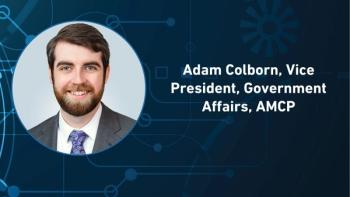
AMCP's Adam Colborn discusses survey findings on TrumpRx's six-month performance, examining payer skepticism about pricing claims and pharmacy access hurdles for patients.

In coordination with the Centers for Medicare and Medicaid Services, 10 PBMs will surface TrumpRx cash prices in prescribers' benefit tools, PCMA announced.

JD Power's 2026 U.S. Pharmacy Study shows mail-order satisfaction climbing as brick-and-mortar retailers lose customer trust and perceived value.

The Critical Layer for Pharma's Growing Direct-to-Patient Play
Published: | Updated:
DTP programs are outpacing regulatory guidance. Chander Viswanathan and Shannon Wiley, JD, make the case for compliance-by-design infrastructure over reactive fixes.
Four pharma commerce experts revisit their 2026 predictions on dealmaking, patient access and commercialization at the year's midpoint.
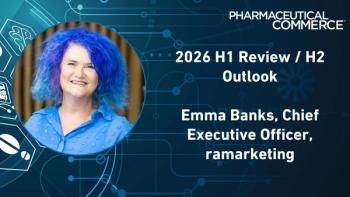
Ramarketing CEO Emma Banks revisits her "year of two halves" outlook, discussing whether 2026 has followed the same pattern and what she expects for H2.

Doceree launched Semmelweis, an AI model built for pharma commercialization, as drugmakers ramp up AI investment in marketing and sales operations.

As PBM pressure mounts and formulary bidding wars squeeze manufacturers, a direct access marketplace model offers drug makers a path to compete on efficacy, price and real-world outcomes.

Erez Israeli explains how Dr. Reddy's approached commercial readiness for its generic semaglutide launch in Canada and what vertical integration in peptide manufacturing means for the GLP-1 market.

Rahul Mittal explains how execution infrastructure can help generics manufacturers improve hospital access, reduce delays, and strengthen coordination.

At the Doceree Makers Summit, leaders from Sanofi, Bristol Myers Squibb, Eli Lilly, and others backed a new pharma marketing operating model to replace fragmented legacy softwares.

As cell and gene therapies move beyond ultra-rare disease indications into broader patient populations, the commercialization infrastructure built around them is due for a fundamental redesign.

Avalere Health analysts map the converging pressures reshaping the drug pricing and distribution landscape ahead of November.

Charley Maxwell explains why Annex 21 is not just a regulatory hurdle, but a key commercial risk point.

Chronic shortages expose how low prices, fragile supply chains, and misaligned incentives are undermining the U.S. generic drug market.
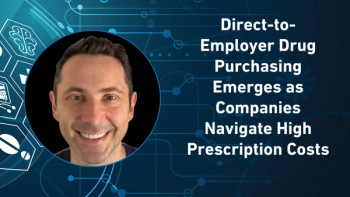
In the first part of his Pharmaceutical Commerce interview, Jay Bregman, founder and CEO of Andel, discusses how employers are exploring direct-to-employer drug purchasing models that bypass traditional pathways.

A policy change allowing approval of some new drugs based on one adequate and well-controlled study could accelerate development timelines, while raising questions about evidentiary standards and downstream supply chain planning.

The partnership aims to speed commercialization, reduce risk, and enable large-volume biologics to shift from IV to subcutaneous delivery.
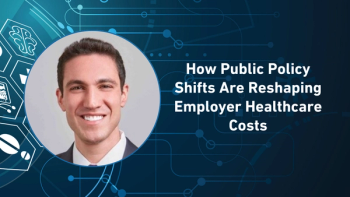
In the second part of his Pharma Commerce video interview, Philip Sclafani, PwC’s pharmaceutical and life sciences lead, points out that a Medicaid spending tightens and ACA subsidies lapse, reduced public coverage is driving spillover effects—shifting costs to hospitals, employers, and commercial drug pricing in an increasingly interconnected healthcare market.
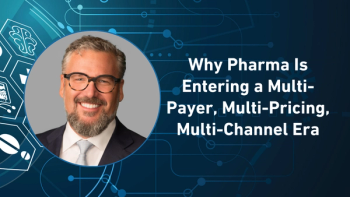
Bill Roth, general manager and managing partner of IntegriChain’s consulting business, previews his new six-part series by outlining how rising payer fragmentation, divergent cash and insurance models, and supply-chain constraints are reshaping brand strategy.

In a discussion on emerging channel strategies, Bill Roth, general manager and managing partner of IntegriChain’s consulting business, explains why DTP models must extend beyond simple cash-pay offerings—highlighting how packaging innovation, insurance-flow backups, and improved patient compliance could unlock new revenue, streamline access, and better reflect clinical outcomes.

In a wide-ranging keynote on disruption across pharmaceutical channels, Bill Roth, general manager and managing partner of IntegriChain’s consulting business, outlines why 2025 marks the beginning of a profound regulatory and commercial transformation—from sweeping policy shifts and accelerating WAC reductions to new debates on direct-to-patient strategies and looming instability in medical benefit reimbursement.

Subject matter experts from Cencora and FuzeRx explore how modern commercialization models, digital-first pharmacy solutions, and closer provider partnerships are reshaping patient access and adherence across today’s complex therapeutic landscape.

Commercialization expert Bill Roth outlines the critical need for "adaptive capacity," detailing how accelerating government regulation and massive patent cliffs are forcing a complete overhaul of commercial strategies across various markets.
In the second part of his Pharma Commerce video interview, Ed Schoonveld, value and access advisor for Schoonveld Advisory and author of The Price of Global Health, notes that while non-transferability could hinder smaller biotechs partnering late with pharma, most alliances are already in place before vouchers become relevant.
Advertisement
Advertisement
Trending on Pharmaceutical Commerce
1
Cardinal Health, McKesson Extend CVS Distribution Deals to 2032
2
What to Watch at LogiPharma: Resilience, Practical AI and New Peer Formats
3
Doceree CEO: AI Should Extend the Field Force, Not Replace It
4
Your Patient Support Data Shows What Happened. Can It Tell You Why?
5