

Business and Finance
Latest News
Advertisement
Latest Videos

Shorts
0:49
Why Most Pharma Giants Are Facing a $100 Billion Growth Gap
7 months ago
by
Dan Chancellor(+1 more)
0:58
The Challenge in Picking the Right Insurance Plan
8 months ago
by
Nicholas Saraceno, Senior Editor(+1 more)
0:40
Innovating the Global Supply Chain
9 months ago
by
Nicholas Saraceno, Senior Editor(+1 more)
A Fork in the Road
a year ago
by
Nicholas Saraceno, Senior Editor(+1 more)
Podcasts
Advertisement
More News

CVS Health is pairing a new Lilly pricing collaboration with a $29 MinuteClinic visit and expanded pharmacist support, disclosed alongside a sharp Q2 earnings beat.

Domestic manufacturing can reduce certain dependencies, but reliable pharmaceutical commercialization requires qualified redundancy, sustainable economics, quality maturity and decision-ready visibility across the full supply network.

Ember LifeSciences and Alfresa, Japan's top pharma wholesaler, form a cold chain alliance as biologics and specialty distribution demand grows.
Four pharma commerce experts revisit their 2026 predictions on dealmaking, patient access and commercialization at the year's midpoint.
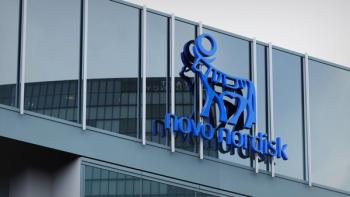
Novo Nordisk’s complaint argues that Lilly's campaigns leave out information about the most effective injectable doses of Wegovy (semaglutide) and Ozempic (semaglutide), a dispute that could reshape how both companies compete for share in the GLP-1 market.
Ramarketing CEO Emma Banks revisits her "year of two halves" outlook, discussing whether 2026 has followed the same pattern and what she expects for H2.
Eli Lilly's acquisition of AtaiBeckley signals growing pharmaceutical industry commitment to psychedelic-based treatments for treatment-resistant depression.

The API Innovation Center's Gerren McHam on China's new supply chain rules, reshoring policy, and where US drug manufacturing goes next.

Manufacturers must forecast and commercialize products across commercial, government and cash economies to maximize lifetime enterprise value.

Amber Hussain Siddique explains why that inventory economics, FEFO compliance gaps, and freight cost structures are driving America's persistent drug shortage crisis and what it takes to fix it.
In this special episode of Pharma Pulse, Rohit Tripathi breaks down how companies should be scenario planning ahead of the first USMCA joint review which begins on July 1.

As PBM pressure mounts and formulary bidding wars squeeze manufacturers, a direct access marketplace model offers drug makers a path to compete on efficacy, price and real-world outcomes.

PwC projects drug spending will outpace medical trends in 2027, driven by GLP-1s and oncology. Here's what it means for market access.
CMS' proposed framework for 2029 and beyond closes a potential formulation loophole and raises the stakes for launch planning.

As the US and Iran reach a framework agreement to reopen the Strait of Hormuz, Pharmaceutical Commerce breaks down what the deal means for pharmaceutical supply chains.

Will Shrank, MD, breaks down why payers, providers, and manufacturers are all struggling to keep pace with a rapidly expanding cell and gene therapy pipeline — and what it will take to fix it.

A new BGH survey shows some large employers are pulling back on GLP-1 weight-loss coverage in 2027 as rising costs and utilization outpace anticipated savings.
In this week's Pharma Pulse, USP's annual shortages report reveals a sharp rise in drug discontinuations, J&J and Roche commit billions to protein degrader platforms, and more.

As specialty drug spend tops 50% of pharmacy costs, health system specialty pharmacies are evolving from dispensers into longitudinal care management partners.

After adding 160 more drugs, TrumpRx tops 800 prescription offerings. Here's what the latest MFN-driven expansion means for pricing and access.
In this week's Pharma Pulse, a Bluesight survey flags hospital pharmacy's top concerns, the Wegovy pill is introduced to the UAE, and more.
Novo Nordisk's UAE launch of the Wegovy pill signals a new phase of oral GLP-1 commercialization, with major implications for pharma distribution, channel strategy, and international market access.
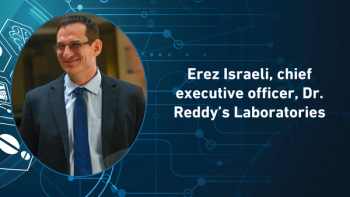
Erez Israeli explains how Dr. Reddy's approached commercial readiness for its generic semaglutide launch in Canada and what vertical integration in peptide manufacturing means for the GLP-1 market.
Cencora will support US distribution of Kite's Yescarta and Tecartus, reducing administrative burdens and expanding CAR T-cell therapy access at authorized treatment centers.
FDA approves Shionogi's Xocova, the first oral post-exposure COVID-19 prevention therapy, reducing infection risk by 67% in Phase III trials.
Advertisement
Advertisement