

Brand & Product Security
Latest News
Advertisement
Latest Videos



Podcasts

Advertisement
More News
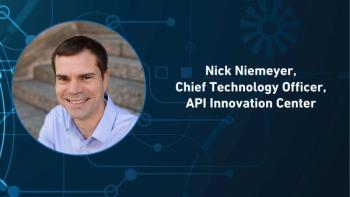
Nick Niemeyer of API Innovation Center on how the National Fragility Index could help reduce US drug shortage risk.
AI-powered automation is transforming pharmacovigilance, cutting AE case intake time amid record FAERS volumes and new FDA/EMA regulatory guidance.
In this week's Pharma Pulse, USP's annual shortages report reveals a sharp rise in drug discontinuations, J&J and Roche commit billions to protein degrader platforms, and more.

The US DSCSA requires digital drug traceability to ensure patient safety, but supply chains face data errors; deploying AI adds an intelligent compliance layer to automate process tracking and protect drug access.

Identiv's ID-Safe portfolio expands NFC authentication and tamper detection to secure pharmaceutical supply chains against counterfeiting and fraud.
Mastering the PSMF is critical for inspection readiness, as it provides regulators an early look at your pharmacovigilance system's compliance.
The agency will evaluate FISP after early results show major gains in speed, capacity, and real-time risk mitigation across US ports of entry.
Counterfeit pharma networks are becoming more sophisticated—leveraging advanced packaging, fragmented logistics, and global trade gaps—making detection harder and patient risk greater than ever.
Companies must assess illicit trade risks under a new EU directive, making materiality and compliance critical for sustainability reporting.
In the final part of his Pharma Commerce video interview, Mark Lee, MarqVision’s founder and CEO, warns that pharmaceutical companies are facing an exponential rise in counterfeit threats as AI accelerates the creation of fake websites, social media profiles, and manipulated product catalogs, making urgent investment in protective technologies a critical priority.
In the third part of his Pharma Commerce video interview, Mark Lee, MarqVision’s founder and CEO, describes how AI-driven surveillance and image recognition vastly outpace traditional brand protection methods, enabling pharmaceutical companies to detect and remove millions of counterfeit listings across global online marketplaces and social media in real time.
In the second part of his Pharma Commerce video interview, Mark Lee, MarqVision’s founder and CEO, explains how wide regional price gaps and lack of visibility in global distribution create openings for counterfeit sellers—with many now specializing in categories like oncology—who exploit platforms such as Facebook and Instagram to market fake drugs.
In the first part of his Pharma Commerce video interview, Mark Lee, MarqVision’s founder and CEO, warns that counterfeiters are using generative AI to clone pharmaceutical packaging, build convincing fake websites, and manipulate search results. rapidly outpacing enforcement efforts and putting patients at serious risk.
Counterfeit drugs infiltrating the US pharma supply chain through gray market channels underscore the urgent need for vigilance.
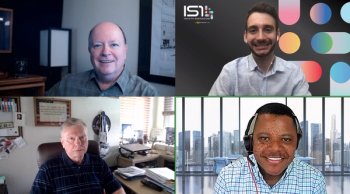
In the sixth part of this roundtable discussion, subject matter experts discuss how serialization, traceability tools, and multi-layered authentication technologies are becoming essential to proactive quality contingency planning, as counterfeiters grow more sophisticated.

These innovations are revolutionizing pharmaceutical packaging by enhancing drug safety, combating counterfeiting, ensuring regulatory compliance, and improving patient adherence across the supply chain.
In the final part of his Pharma Commerce video interview, Sean O’Hearen, founder and principal consultant at 1st Line Partners, offers communication strategies for staying confident in genuine pharmaceuticals while also remaining vigilant against counterfeit threats.
In the fourth part of this roundtable discussion, a panel of subject matter experts dive into data exchange challenges relating to the Drug Supply Chain Security Act.
In the fourth part of his Pharma Commerce video interview, Sean O’Hearen, founder and principal consultant at 1st Line Partners, describes the prominence of underreporting falsified medicines.
In the third part of his Pharma Commerce video interview, Sean O’Hearen, founder and principal consultant at 1st Line Partners, recommends regulatory or verification mechanisms that can help safely legitimize online medicine procurement.
In the second part of his Pharma Commerce video interview, Sean O’Hearen, founder and principal consultant at 1st Line Partners, explains how the private sector should strategically support and scale efforts to ensure that HCPs globally receive substandard and falsified medicine detection training.
In the first part of his Pharma Commerce video interview, Sean O’Hearen, founder and principal consultant at 1st Line Partners, lays out the systemic gaps in medical and pharmacy education that need to be addressed, along with how academic and clinical institutions can accelerate awareness training in identifying substandard and falsified medicines.
In the first part of this roundtable discussion, a panel of subject matter experts introduce themselves, while discussing the strategies that are most effective in ensuring resilience across the global supply chain.
Healthcare providers must enhance awareness of counterfeit medicines to protect patients, especially as online drug purchases rise.
In the third part of her Pharma Commerce video interview, Kirsten Newquist, Identiv’s CEO, shares the ways in which regulations, including DSCSA, are impacting the adoption of smarter packaging technologies across the industry.
Advertisement
Advertisement
Trending on Pharmaceutical Commerce
1
Beyond the Patent Cliff: Why Generics and Biosimilars Demand Different Playbooks
2
MFN Program Grows to 26 Drugmakers as Nine More Commit to $19.6B in US Manufacturing
3
What the Independent Pharmacy Cooperative Acquisition of USave Pharmacy Group Signals
4
Inside the Three-Year Transition to NDC-12
5